
Key takeaways
- Two DFW contractors avoided paying on claims that were never theirs, because they had documentation and could produce it.
- Photos, a written report, and not touching the equipment is what protected the first contractor from being blamed for someone else's faulty work.
- Proper notice matters. A contractor has to be told there's a problem and given the opportunity to correct it, or a claim may not stand.
- Every subcontractor should have a four-document file, and the certificate of insurance in it should be verified by phone.
When I onboard a new client, one of the first conversations we have isn’t about coverage limits. It’s about documentation.
That surprises people. They came in to talk about a policy, and I want to talk about photos and file folders.
The reason is simple. In the contracting world, the question of who pays is very often decided by who can show what happened. Two situations from my own book of business make that point better than I can in the abstract.
| Document | Why it matters | When to collect it |
|---|---|---|
| Service agreement | Defines the scope they’re performing and on what terms | Before work starts |
| Signed subcontractor agreement with hold harmless | Keeps their liability with them, and carriers weigh it in your rate | Before work starts |
| W-9 | How you issue their 1099 at the end of the year | Before the first payment |
| Certificate of insurance | Proof they carry their own coverage | Before work starts, then verified by phone |
The subcontractor file, four documents
Situation one, the HVAC inspection
A few years ago I had an HVAC contractor call me about something that happened on a job.
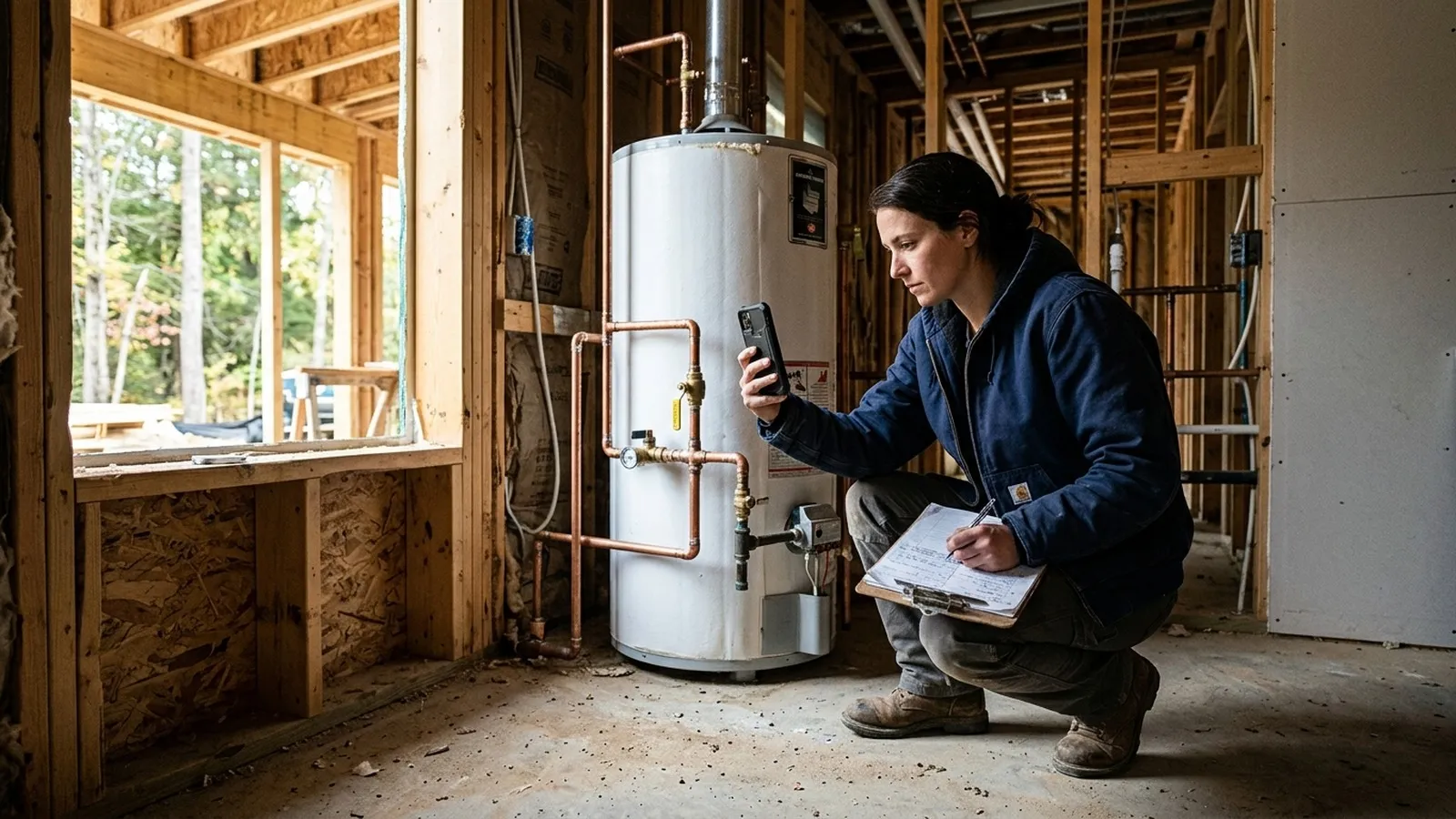
A realtor in their market had asked them to come inspect a new build home that was about to close. The homeowner just wanted to make sure everything had been done correctly, so anything that needed to be corrected could go on a punch list, rather than finding out something hadn’t been installed correctly after the fact.
So my client goes out, inspects the unit, and points out a line that hadn’t been properly connected. It was already causing some leakage.
They took photos. They documented it. They gave a written report.
And they did not touch the apparatus. Because the moment they touch it, they could be held responsible for potential claims on it.
They called me and said, hey, we had something happen today. The builder is now telling the homeowner, well, you had someone come out and inspect that, they screwed up, and now they’re responsible for the damages.
They were covered. That was a builder trying to posture the homeowner and scare them, rather than take responsibility for faulty work that had been put in place by their own subcontractor.
The photos and the written report are what turned that into a short conversation instead of a long one.
Situation two, the subrogation call
Here’s another one.
A contractor of mine completed a job. Afterward, the homeowner went and hired one of the subcontractors who had performed work on that job to do some additional work at their home.
That contractor found a problem with plumbing that had been installed or serviced on the first job, and the same plumber was used to perform the second scope of service.
Then the original builder got a call from an insurance company, trying to subrogate for damages.
Luckily, he had documentation. And he had never been notified about the issue.
That second part matters more than people realize. As a client, you have to give proper notice. A contractor has to be told there’s a problem so they have the opportunity to correct the work in place. Without that, you may or may not be able to file a claim at all.
There was no payout by the original contractor, because we satisfied the due diligence of the adjuster who was calling from the insurance company.
They took photos. They documented it. And they did not touch the apparatus.
What both situations have in common
Neither of those contractors won because they were right. They won because they could show they were right, and because someone in their corner understood how claims work and what the contract actually said.
That’s the part that gets missed. Documentation isn’t paperwork for its own sake, and it isn’t about being careful for the sake of being careful. It’s the difference between a phone call and a payout.
It also tends to work quietly. You don’t find out your file was good enough until the day somebody comes looking, and by then you can’t go back and build it.
The four-document subcontractor file
If you hire people to perform work for you as a subcontractor, you should have a file for every single one of them.
- Their service agreement with you
- A signed subcontractor agreement, ideally with a hold harmless clause
- A copy of their W-9, which is how you’re going to issue them a 1099 at the end of the year
- A copy of any and all insurance they carry
Four documents. If you can’t produce all four for every sub who touched your last three jobs, that’s a good project for this week.
Start with your three most active subs and build the complete file for each, then work backward through the rest. And if you don’t have a subcontractor agreement template at all, solve that first. Everything else in the file assumes one exists.
Why a certificate of insurance isn't enough on its own
This is the one that surprises people.
You cannot believe how many people will call an insurance agency, get the policies purely for the sake of getting a certificate of insurance, hand that certificate over, and then cancel the policies afterward.
The paper in your file looks perfect. The coverage behind it isn’t there.
So get the certificate, and then call and verify that the insurance is actually in place. It takes one phone call, and it’s the difference between having proof and having a piece of paper.
Frequently asked questions
Want a second set of eyes on your documentation?