Key takeaways
- Before an underwriter offers you a policy, they look you up: your business structure, how long you've been operating, your claims history, your website and your social media.
- If your website or social media suggests a broader exposure than your application describes, you can be declined, even after you've been quoted a good rate.
- One line on a website ("we ship to Canada") cost a distributor an instant decline, for sales they had never actually made.
- Your online presence has to mirror the business you've disclosed to the carrier. When it does, the problem usually goes away.
Most business owners think of their website and social media as marketing. Underwriters think of them as evidence.
When I submit a new client to a carrier, the underwriter doesn’t just read the application. They go and check.
What an underwriter looks at first
The first thing they review is the business structure. If it’s a sole proprietor operating under a DBA in a low-risk class, that’s usually not much of a concern. If it’s an LLC, they want to know when it was formed.
That matters most for brand new businesses. A business with no track record is a higher risk than one that’s established, and the way a track record gets evaluated is through the claims report, which in insurance terms is called a loss run.
Unlike personal insurance, a commercial loss run isn’t automatically pulled through a system. Any time you ask a new carrier to look at your business, loss runs have to be provided.
Then the underwriter looks at you the way your customers do: online.
Quoted, then declined
I’ve had multiple clients where we submitted the business, got good rates, and then the underwriter came back and said, I’m sorry, we’re going to decline this.
Very often, the reason is something on their Facebook, their Instagram or their website that indicates a broader exposure than what we identified on the quote.
Your website is part of your application, whether you meant it to be or not.
The Canada problem
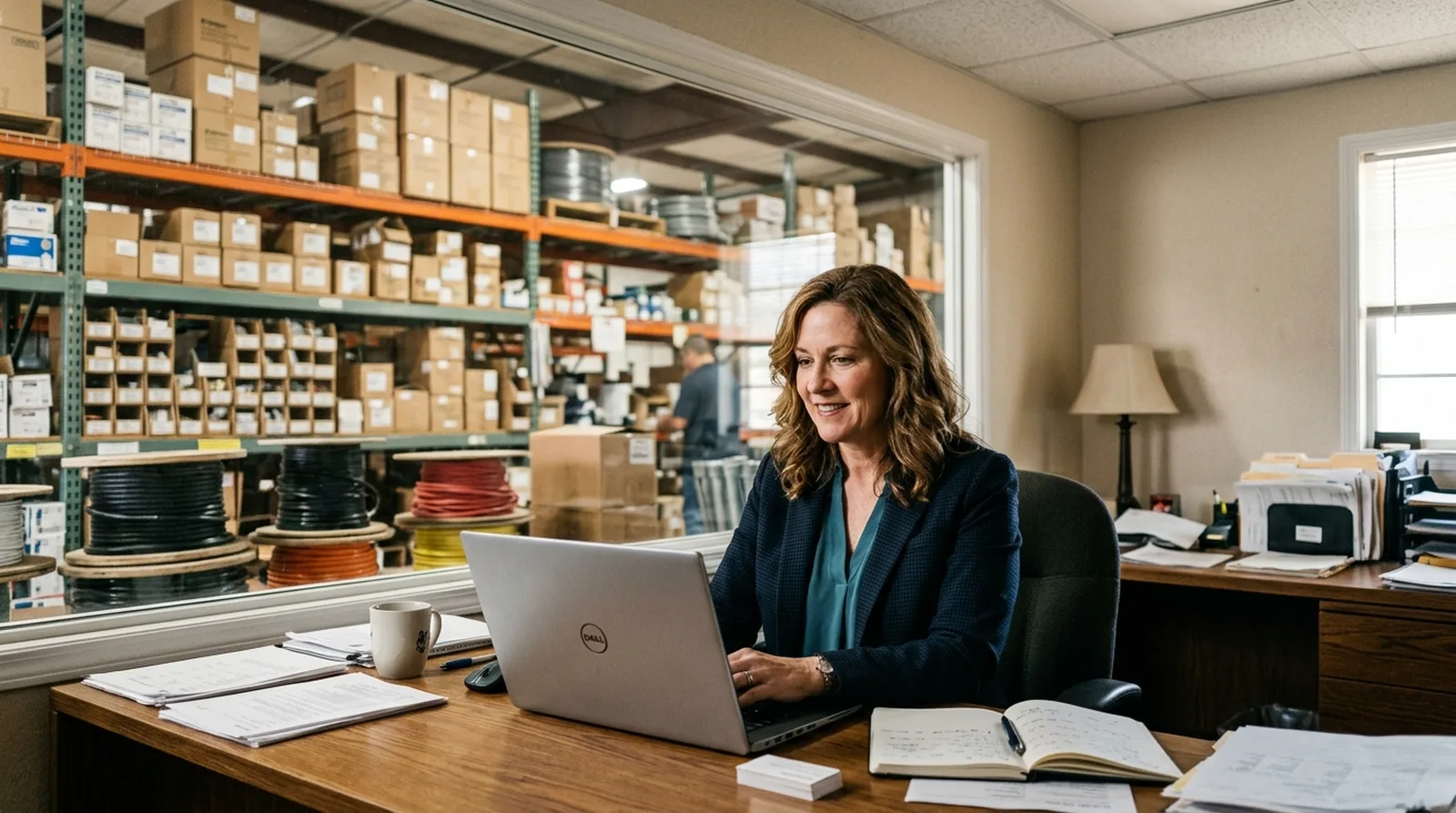
I had a client, an electrical supply distributor, whose website said they also shipped to Canada.
That was an instant decline.
For a US carrier, product liability for goods sold into another country is a very different risk. If something goes wrong, recovering those damages through a legal system that doesn’t mirror ours is hard, and many carriers simply won’t take it on.
So I called the client. You didn’t mention any sales in Canada, I said.
She said, we’ve never sold anything in Canada.
Then why is it on your website?
The owner had added it thinking it might bring in some Canadian orders. I asked how quickly they could take it down. They edited the site almost instantly. I went back to the underwriter, the underwriter verified the change and approved it, and we got that client a great price.
One sentence nearly cost them their coverage. It wasn’t even true.
When the photos tell a different story
A few years ago, a well-established bar reached out to me as a prospect.
They ran happy hour specials and late-night promotions, and nearly all of the photography on their website was young, scantily dressed women and men out partying. To an underwriter, that read as a much riskier operation than the one on the application, and the carrier declined it.
Nothing on that website was technically false. It just told a different story than the application did, and underwriters believe the pictures.
Bars and restaurants face this more than most. If you sell alcohol on your premises at all, you need liquor liability, even as a small restaurant with very little in liquor sales, because you can be named in a lawsuit if a patron has an accident on the way home. Carriers limit how much of your revenue can come from alcohol versus food, and bars are written in the wholesale market because they’re about as risky as liquor liability gets. So how you promote alcohol matters. That’s a topic of its own, and it’s coming in a future article. In the meantime, our insurance checklist for restaurant owners in Texas covers the basics.
What underwriters are checking for
| What’s online | What the underwriter may conclude |
|---|---|
| “We ship nationwide and internationally” | Product liability exposure outside the US |
| Services listed that aren’t on your application | Operations you haven’t disclosed or priced |
| Photos of work types, heights, or equipment you didn’t mention | A higher-hazard class than you applied under |
| Promotions built around drinking, late nights, or parties | Heavier liquor liability exposure |
| A founding date or “est.” year that doesn’t match your filings | Less experience than stated |
Before your next renewal or new application
Take ten minutes and look at your business the way an underwriter will:
- Read your website's services page and compare it, line by line, with what you've told your agent.
- Scroll back through the last few months of your social media. What do the photos and captions suggest you do?
- Remove anything aspirational that you don't actually do yet, like regions you don't serve, services you don't offer, or products you don't sell.
- Check the old pages too. A page from three years ago still counts.
- If something online is accurate but wasn't on your application, tell your agent now. It's far easier to disclose it than to be caught by it.
A mismatch doesn’t just risk a decline. If it’s found after a loss, it can turn into a much harder conversation about whether the policy fits the business at all. For a refresher on what a standard policy is built to cover, see what general liability insurance is, and whether you actually need it.
Frequently asked questions
Not sure what an underwriter would see?